AirTag Alternatives & Bluetooth Trackers for Travel 2026: The Honest Comparison
 13 min read
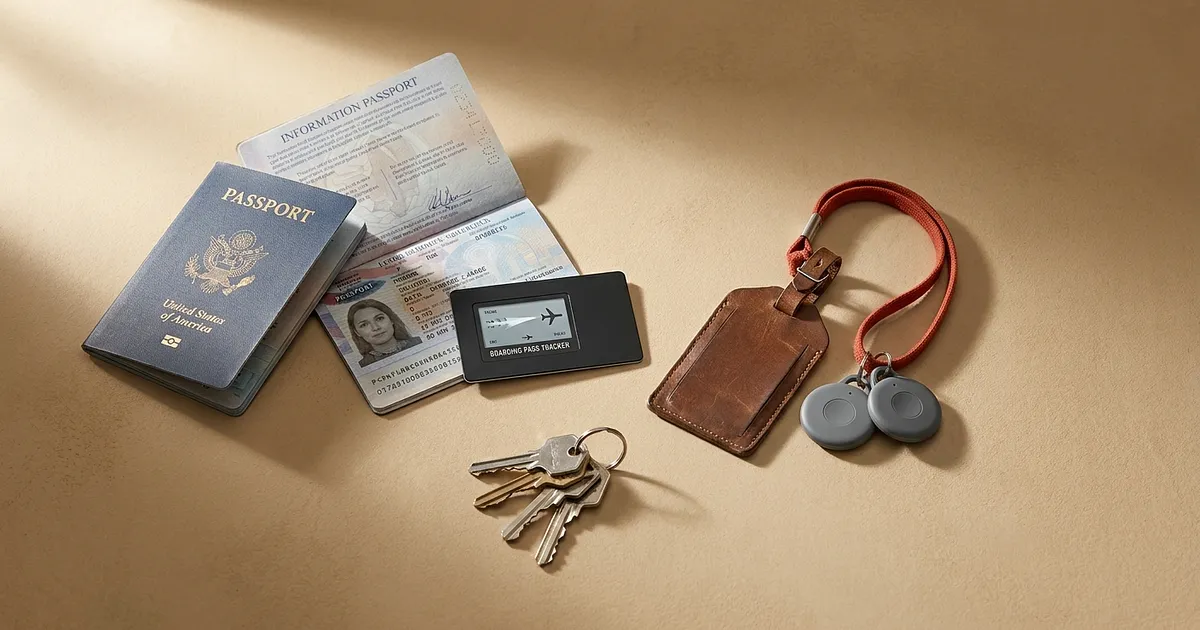
You're after an AirTag alternative for your next trip, you type "airtag alternative" into Google, and you get forty near-identical Top 5 lists. They all show the same devices. None of them explains the one thing that actually matters: a Bluetooth tracker is useless without other people's phones nearby. Not a single one of these devices has GPS.
I'll explain how these trackers really work (spoiler: not the way most people think), which one suits which phone, what's genuinely allowed in your suitcase in 2026, and why the dot on the map doesn't move during a flight. Let's go.
The trackers at a glance
Here's every major luggage tracker for travel side by side, with network, platform, and price at a glance:
| Tracker | Network | Platform | Precision Finding (UWB) | Battery | Price (as of Aug 2026) |
|---|---|---|---|---|---|
| Apple AirTag | Apple "Find My" | iPhone (setup) | Yes, with newer iPhones | CR2032, replaceable | from €26.76 |
| Samsung SmartTag2 | SmartThings Find | Galaxy only | Yes, with Galaxy | CR2032, replaceable | from €14.80 |
| Tile Pro | Tile (Life360) | iOS + Android | No | replaceable | from €79.99 (4-pack) |
| Chipolo POP | Apple "Find My" OR Google | iOS or Android | No | CR2032, replaceable | from €35.00 |
| Tile Slim | Tile (Life360) | iOS + Android | No | sealed, ~3 years | from €32.99 (2-pack) |
Prices and figures are a snapshot from 10 August 2026 and change constantly. Check for yourself before buying.
No tracker has GPS. And that's the whole point
Almost everyone assumes these trackers have a little GPS chip inside and show your suitcase live on a map, like a car in a sat-nav. Wrong. These devices only broadcast a faint Bluetooth signal. A stranger's phone nearby, running the matching app, picks up that signal, attaches its own GPS location, and relays it anonymously to the manufacturer's servers.
Sounds technical, but it's the single most important thing in this whole article. Because everything else follows from it. An AirTag "just works" at Frankfurt airport, since there are thousands of iPhones milling about. In a remote area with few Apple devices, it goes quiet. And in an aircraft's cargo hold? No phone in range, so no update until the plane lands. That's exactly what happened to me last year flying home from Bangkok: the dot on the map just stopped moving the moment I left Frankfurt, and it didn't budge again until my suitcase landed near an iPhone in Bangkok.
Independent testers back this up. In a recent Stiftung Warentest study (Test 1/2026, published December 2025), the best-known tracker of all, the AirTag, landed only mid-table. Several alternatives around 30 euros cheaper performed comparably. Being famous clearly doesn't make it the best pick.
The four networks, and why they don't talk to each other
There are four big finding networks, and every AirTag alternative depends on exactly one of them. They don't share locations with one another. Buy into the wrong network and you own an expensive keyring that does nothing. That's the real buying decision, not the color or the design.
Apple "Find My": for iPhone travelers
The Find My network is, by Apple's own account, the largest crowdsourced finding network in the world, with more than a billion active devices. For travelers that means: in most European cities, across North America, in Japan, you'll usually get your suitcase back fast, because iPhones are everywhere.
The AirTag needs an iPhone for setup. With no Apple device in the household, you can't even get started. In return you get "Precision Finding" via UWB (more on that shortly), a replaceable CR2032 coin cell, and an IP67 water- and dust-resistant case. At 4.7 stars from over 3,900 reviews, you roughly know what you're getting.
Traveling with several bags, or want to hand one to each family member? Then the four-pack almost always works out cheaper than buying four singles.
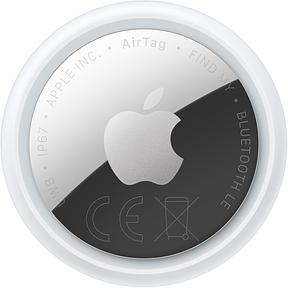
Affiliate link. Buying through it earns us a commission; the price stays the same for you.
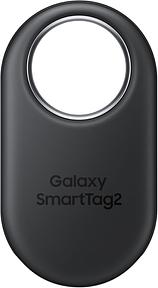
Not available in your region — closest match
View at Amazon (as of Aug 14)Affiliate link. Buying through it earns us a commission; the price stays the same for you.
Samsung SmartThings Find: Galaxy people only
The Samsung SmartTag2 sits on the SmartThings Find network and works exclusively with Samsung Galaxy devices. No iPhone, no other Android, no exceptions. For an all-Galaxy household, though, it's genuinely strong: Samsung claims up to 500 days of battery, over 700 in power-saving mode. That's genuinely impressive for something this small. With more than 22.748 reviews at 4.4 stars it's also one of the most-bought trackers around, and the price (from €14.80, as of August 2026) doesn't sting either.
The catch is that network. Fly into a region with low Samsung density, or hand it to your iPhone-using partner, and the SmartTag2 quickly goes blind. Buy it only if you're all genuinely on Galaxy.
Not available in your region — closest match
View at Amazon (as of Aug 14)Affiliate link. Buying through it earns us a commission; the price stays the same for you.
Tile: the only truly cross-platform network
Tile (now under the Life360 umbrella) runs its own network with, according to press reports, roughly 70 million users. Smaller than Apple's, but with a big upside: it runs on iOS AND Android through the Tile app. For mixed households that's often the cleanest solution. Android Authority likewise recommends a cross-platform tracker like Tile for iPhone-plus-Android setups, precisely because the SmartTag2 stays Galaxy-only.
The Tile Pro is the loud, rugged luggage tracker of the range, with a replaceable battery and long range. The four-pack sits at around €79.99 (as of August 2026), so it isn't exactly cheap. At 4.1 stars from over 3,700 reviews you're paying for a network that doesn't care which operating system you run.
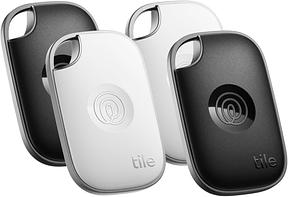
Affiliate link. Buying through it earns us a commission; the price stays the same for you.
Google "Find My Device": Android without the Samsung lock-in
Since Google built out its "Find My Device" network, there's finally a good option for Android users who don't own a Galaxy. The Chipolo POP is handy here, because at setup you choose: you either put it on Apple's "Find My" network OR on Google's. One or the other, not both at once. So a single device covers iPhone or Android travelers depending on how you set it up.
At 4.1 stars from around 1,249 reviews, the POP is a solid all-rounder, nothing flashy, but dependable. From €35.00 (as of August 2026) you get it with a replaceable CR2032 cell. It has no UWB Precision Finding, more on that below.
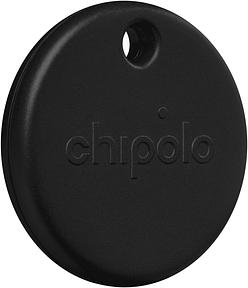
Affiliate link. Buying through it earns us a commission; the price stays the same for you.
AirTag alternative for Android: does it work? (Short version: no, not properly)
"airtag android" is one of the most-searched terms around this topic, and the honest answer disappoints a lot of people: an AirTag can't be set up or managed with an Android phone. You genuinely need an iPhone. An Android device can, at most, passively scan for a stranger's lost AirTag, but it can't locate your own.
So if you're on Android, the AirTag is out. Your real options: Tile (runs everywhere), the Chipolo POP in its Google setup, or the SmartTag2 if you happen to be on Galaxy. Traveling as a couple with one iPhone and one Android? Then pick a tracker both of you can manage from your own phone. Tile is usually the quietest choice for that.
For your wallet and travel documents, by the way, a flat tracker beats a chunky fob. The Tile Slim slides into a card slot, is proven at 4.0 stars from over 5,700 reviews, and costs from €32.99 as a two-pack (as of August 2026). Its battery is sealed and lasts about three years, after which you replace the whole thing. Sounds throwaway, but that's the price of the slim shape.
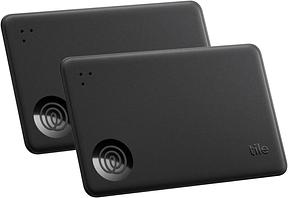
Life360 Tile Slim Geldbörsenfinder (2er-Pack)
View at AmazonAffiliate link. Buying through it earns us a commission; the price stays the same for you.
Precision Finding with UWB versus rough Bluetooth proximity
There are two ways a tracker tells you "here I am". One is the big Bluetooth crowd network from earlier: rough, long reach, tells you "your suitcase was last seen at Munich airport". The other is UWB (Ultra-Wideband), also called Precision Finding. That's short-range radio and gives you an arrow plus a distance: "3 meters to go, to your left".
Only the AirTag (with newer iPhones) and the SmartTag2 (with matching Galaxy devices) have UWB. Tile and the Chipolo POP don't, so they'll only show you the rough map and make the tracker ring loudly. At the baggage carousel, where ten black roller cases look identical, that arrow makes a real difference. For the plain "where on earth is my suitcase" case, Bluetooth is enough.
Battery: what you can swap and what you can't
Here's a difference that bites later if you don't watch for it. The AirTag, SmartTag2, Chipolo POP and Tile Pro have a replaceable battery, usually the cheap CR2032 coin cell. When it's flat, you pop the device open, drop a new one in, done. The Tile Slim, on the other hand, is sealed: no battery swap, and after roughly three years you replace the whole unit.
For a long trip the practical takeaway is simple: with the replaceable models, pack a spare CR2032. It weighs nothing and costs almost nothing. That spares you hunting for a coin cell at your holiday destination.
Is the tracker even allowed in your suitcase? The 2026 flight rules
This is where most articles go vague or quote outdated scare stories. The clear, current answer: yes, it is, and that goes for the AirTag just as much as for any other AirTag alternative in your suitcase.
The Luftfahrt-Bundesamt confirmed in May 2023 that Bluetooth trackers with up to 0,3 g of lithium metal (or up to 2,7 Wh for lithium-ion) may travel switched on in checked baggage. The device only has to be protected from damage. The US FAA confirmed the same: "Luggage tracking devices powered by lithium metal cells that have 0.3 grams or less of lithium can be used on checked baggage." An AirTag holds around 0,1 g of lithium, comfortably under the line.
So where does all the online worry come from? In 2022 Lufthansa briefly banned AirTags in checked bags, citing rules for active transmitters in the hold. As aeroTELEGRAPH reported, that ban was lifted again after the authority's official assessment. The old headlines still float around anyway. One caveat: the FAA itself notes that not every tracker automatically meets the threshold. With no-name devices, check the lithium content rather than assuming "AirTag's allowed, so mine is too".
Will my tracker work abroad?
Now the part generic gadget lists skip entirely. Because every tracker depends on other people's phones, its real hit rate hinges on device density at your destination. In countries with a high iPhone share, your AirTag is in great shape. In regions where hardly anyone has an iPhone, it thins out, no matter how good the device is on paper.
This is exactly where it pays to think, before you leave, about which phones are common where you're going. If you're flying to Southeast Asia and planning your connectivity there anyway, our eSIM comparison for Thailand is a good starting point, and a good moment to also weigh up whether Apple or Android is more common at your destination. Rule of thumb: a tracker on the densest network at your destination beats any "test winner" that finds barely any phones there.
What if someone is secretly tracking YOU?
A fair worry, especially with rental cars and hotel rooms. Since May 2024, iOS and Android warn you, according to Apple, automatically when a stranger's tracker travels with you over time, regardless of which network it's paired to. That's the one place the otherwise separate networks cooperate. If you get such an alert, you can make the unknown tracker ring and find it. For travelers that's a genuine safety gain that simply didn't exist before 2024.
Which AirTag alternative fits you?
Let's make it concrete, because "the best tracker" doesn't exist, only the best one for your setup.
Got an iPhone and mostly travel to Apple-dense areas? An AirTag, or a Chipolo POP in Apple setup if you want to save. Traveling as a family with several suitcases? The AirTag four-pack is the cheaper math. All-in on Galaxy? SmartTag2, no question, the price and battery are unbeatable. Mixed iPhone AND Android at home? A Tile Pro for the luggage, because the network serves both phones. And for a wallet or passport sleeve, the flat Tile Slim is spot on.
Honestly, the priciest tracker is rarely the right one. The right one is whichever network actually works where you're flying, and that everyone traveling with you can see from their own phone. No spec sheet can decide that for you. But now you know what to look for in an AirTag alternative.
All products from this post
The ones we named above are marked; the rest are alternatives in the same category.
Affiliate notice: As an Amazon Associate, we earn from qualifying purchases. Product prices and availability are subject to change.
Frequently Asked Questions
Do AirTags and Bluetooth trackers have GPS?
No. None of these devices has a GPS chip. They only broadcast a Bluetooth signal that a nearby stranger's phone picks up and relays with its own location. So there's no live moving dot, only the last spot a phone reported. That's why the map doesn't move during a flight: there's no phone in range inside the cargo hold.
Does an AirTag work with Android?
Not really. To set one up and locate it you genuinely need an iPhone. An Android phone can only passively detect a stranger's lost AirTag, not manage your own. As an Android user you're better off with Tile, a Chipolo in its Google setup, or the Samsung SmartTag2 if you're on Galaxy.
Can I pack a Bluetooth tracker switched on in my suitcase?
Yes. Germany's Luftfahrt-Bundesamt has allowed Bluetooth trackers with up to 0,3 g of lithium metal switched on in checked baggage since May 2023, and so does the US FAA. An AirTag, at around 0,1 g, is comfortably below that. Lufthansa's brief 2022 ban was lifted long ago.
Which tracker is best for mixed iPhone and Android households?
A cross-platform tracker like Tile, because its network runs on iOS and Android at once. That way everyone can see the luggage from their own phone. The AirTag is out because it needs an iPhone, and the SmartTag2 only works with Samsung Galaxy devices.
How long does a tracker's battery last?
Around one to two years, depending on the model. The AirTag, SmartTag2 and Chipolo POP use replaceable CR2032 coin cells, and Samsung claims up to 500 days for the SmartTag2. The Tile Slim is sealed and gets replaced whole after roughly three years. For long trips, a spare battery in your bag is worth it on the replaceable models.
Sources
- recent Stiftung Warentest study test.de
- by Apple's own account digitalcitizen.life
- Android Authority androidauthority.com
- Luftfahrt-Bundesamt confirmed in May 2023 heise.de
- US FAA confirmed the same afar.com
- aeroTELEGRAPH reported aerotelegraph.com
- iOS and Android warn you, according to Apple apple.com