Outdoor Smartwatch for Travel: GPS Watches Compared 2026
 12 min read

You're planning a two-week trek, a city break, or a hike well beyond the nearest cell tower, and the watch on your wrist has to navigate you reliably. That's exactly where a good outdoor smartwatch parts ways with an expensive disappointment. Most comparisons only look at sport and fitness. We look at what actually counts on the road: GPS accuracy in unfamiliar cities, battery that lasts days without a socket, offline maps, and the honest question of whether a watch like this can replace your phone abroad.
The models at a glance
Six watches, three price tiers, one comparison. All prices are Amazon.de values as of 10 August 2026, and as you know, they shift almost weekly.
| Model | Price (€, as of 10.08.2026) | GPS/GNSS | Battery | Water resistance | Offline maps | LTE/eSIM | Rating |
|---|---|---|---|---|---|---|---|
| Amazfit Active Max 48mm | 144,99 € | GPS | up to 25 days | 5ATM | Yes | No | 4,5★ (1,063) |
| Amazfit T-Rex 3 48mm | 250,99 € | Dual-band, 6 satellite systems | up to 27 days | 5ATM | Yes | No | 4,5★ (2,686) |
| Garmin Instinct 2X Solar 50mm | 223,99 € | GPS+GLONASS+Galileo | up to 40 days (solar) | 10ATM | No (breadcrumb only) | No | 4,6★ (2,137) |
| Samsung Galaxy Watch7 44mm LTE | 195,75 € | GPS | around 1 day (Wear OS class) | 5ATM / IP68 / MIL-STD-810H | Limited (Wear OS) | LTE | 4,3★ (267) |
| Garmin Fenix 7X Pro Solar 51mm | 435,99 € | GPS multi-band | up to 37 days (solar) | 10ATM | Yes (international) | No | 4,6★ (744) |
| Apple Watch Ultra 3 49mm | 837,63 € | Dual-frequency (GPS/GLONASS/Galileo/QZSS/BeiDou) | up to 42h, 72h low-power | 100m (per Apple) | Yes (since 2024) | eSIM/LTE | 4,7★ (154) |
Smartwatches are everyday kit now. According to the Bitkom Consumer Technology 2024 survey of more than 1,100 people, 36 percent of people in Germany use a smartwatch, and 41 percent of users rely on it for navigation. On the road, that nice-to-have quickly becomes the main argument.
What actually matters in an outdoor smartwatch for travel
Before the scenarios, three things that make the difference. And yes, a little bit of tech is worth it here.
GPS accuracy. Modern watches pick up satellite signals on two frequencies at once, often L1 and L5. That's called multi-band, or dual-frequency. As Garmin's own GNSS team explains, this lets the watch spot reflected signals and throw them out, precisely the errors that make your track jump across a river in a narrow alley. How big that problem gets was measured by a peer-reviewed 2025 study in the journal Sensors: in a dense urban canyon, the average horizontal GPS error sat at 13 metres, and better signal processing pushed it down to 4.7 metres. Thirteen metres off, in Rome that's the wrong alley.
Battery. Precision costs power. Garmin's SatIQ breakdown shows it on the Fenix 7X: up to 89 hours in GPS-only mode, but only 36 hours with full multi-band. Roughly halved. On a day trip that's irrelevant, on a week-long tour it's decisive.
Offline maps. The point where a lot of buyers get it wrong. A real offline map sits entirely on the watch and works with no connection at all. A plain "map view" streams the tiles and needs data. According to Forbes' rundown of GPS watches with offline maps, the feature now starts around 79 dollars, where it used to be reserved for watches north of 500 euros. Not every watch that promises "navigation" can do this. Keep that in mind for the next bit.
Scenario 1: Multi-day trekking abroad
Two weeks in Nepal, the GR20 in Corsica, the Fjällräven Classic in Sweden. No power, no signal, plenty of vertical metres. Three things count here: battery in days rather than hours, offline maps stored on the watch, and a case that survives a fall. Multi-band precision? Nice, but rarely the problem in open terrain, and it drains the battery anyway. Switch it on when the forest closes in, otherwise leave it off.
Garmin Fenix 7X Pro Solar: the do-it-all option
Garmin Fenix 7X Pro Solar, 51mm GPS-Multisport-Smartwatch is, at around 436 € (as of 10 August 2026), the priciest recommendation in this comparison, and for long treks the obvious one. International offline maps are on board, the 10ATM case shrugs off rain and river crossings, and the solar charging surface stretches runtime to up to 37 days in smartwatch mode. A 4,6 out of 5 rating from 744 reviews is a strong signal. Who it's not for: if you're rarely out for more than a day at a time, you're paying for reserves you'll never touch.
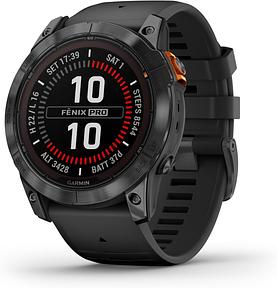
Garmin Fenix 7X Pro Solar, 51mm GPS-Multisport-Smartwatch
View at AmazonAffiliate link. Buying through it earns us a commission; the price stays the same for you.
Amazfit T-Rex 3: the budget trekking alternative
Amazfit T-Rex 3 Outdoor Smartwatch 48mm, 6 Satellitensysteme Dual-Band GPS costs around 251 € (as of 10 August 2026) and does the important trekking jobs surprisingly well. It tracks across 6 satellite systems with dual-band GPS, has offline maps, and lasts up to 27 days. Over 2,686 reviews at 4,5 stars, that's no longer a niche. Honestly, you get most of what the twice-as-expensive Garmin does. The premium over the Fenix pays off mainly if you value Garmin's mapping ecosystem and the longer solar reserve.
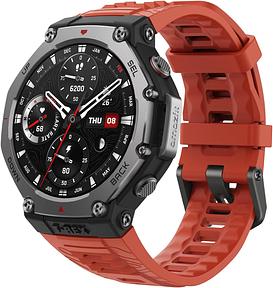
Amazfit T-Rex 3 Outdoor Smartwatch 48mm, 6 Satellitensysteme Dual-Band GPS
View at AmazonAffiliate link. Buying through it earns us a commission; the price stays the same for you.
Scenario 2: City-break navigation without a rental phone
Lisbon's old town, Naples' alleyways, Istanbul's bazaar quarter. Everything flips here. Now the multi-band precision that didn't matter in the woods counts, because the tall buildings bounce the signals around. And it'd be handy to tap your wrist instead of fishing your phone out in a crowd. Two watches with LTE.
A realistic expectation first: in an independent Manhattan GPS test by DC Rainmaker, four watches, with and without multi-band, ended up only about 1 percent apart. Multi-band is noticeably better in the urban canyon, but it's not a night-and-day difference. Expect an improvement, not a miracle.
Samsung Galaxy Watch7 LTE: the sensible city-trip watch
Samsung Galaxy Watch7 44mm Smartwatch, LTE sits at around 196 € (as of 10 August 2026), making it the cheapest LTE entry here. The case meets 5ATM, IP68, and the military standard MIL-STD-810H, tough enough for cobblestone life. The catch: as with Wear OS watches generally, the battery lasts about a day rather than a week, and the offline map function is more limited than on the Garmin models. For city trips with a hotel and a charger, no drama. For a mountain tour, it is.
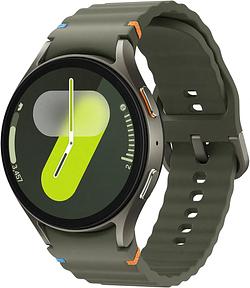
Samsung Galaxy Watch7 44mm Smartwatch, LTE
View at AmazonAffiliate link. Buying through it earns us a commission; the price stays the same for you.
Apple Watch Ultra 3: expensive, but technically ahead
Apple Watch Ultra 3 GPS + Cellular 49mm, Titangehäuse is, at around 838 € (as of 10 August 2026), by far the most expensive watch in the comparison. In return you get the broadest GPS package: dual-frequency across GPS/GLONASS/Galileo/QZSS/BeiDou, exactly the kit that plays to its strengths in narrow streets. Add satellite SOS and a water resistance Apple states as 100m (manufacturer figure, not independently verified). At up to 42 hours, 72 in low-power mode, the battery is decent for an AMOLED watch but a long way from Garmin's weeks. For iPhone users who want precision and eSIM in one, it's the reference. For everyone else, hard to justify.
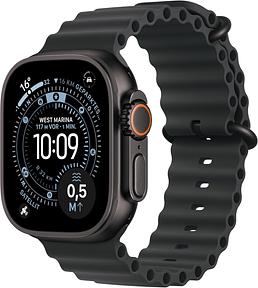
Apple Watch Ultra 3 GPS + Cellular 49mm, Titangehäuse
View at AmazonAffiliate link. Buying through it earns us a commission; the price stays the same for you.
Scenario 3: Off-grid hiking
No signal, no phone, no plan B. On a remote tour the chip generation barely matters, only one thing does: can you reach your destination with zero connectivity? That's down to offline maps and battery, not the number of satellite systems on the spec sheet. German trekking forums are fairly united on this: offline maps and Komoot or Outdooractive import are non-negotiable, and many deliberately switch from phone to watch to save the phone battery for emergencies.
Amazfit Active Max: offline navigation on the cheap
Amazfit Active Max 48mm Smartwatch, GPS, Offline-Karten, 5 ATM is, at around 145 € (as of 10 August 2026), the cheapest watch here and still off-grid capable. It has real offline maps on board, a 5ATM case, and up to 25 days of battery. 4,5 stars from 1,063 reviews. If you're buying your first hiking watch and don't want to land well over 200 euros, you start here. It does the important stuff without charging you for extras you'll never touch on the trail.
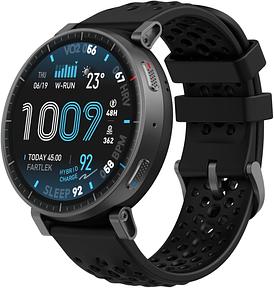
Amazfit Active Max 48mm Smartwatch, GPS, Offline-Karten, 5 ATM
View at AmazonAffiliate link. Buying through it earns us a commission; the price stays the same for you.
Garmin Instinct 2X Solar: battery king with one honest catch
Garmin Instinct 2X Solar, 50mm Multisport-Smartwatch, GPS+GLONASS+Galileo costs around 224 € (as of 10 August 2026) and, thanks to solar, lasts up to 40 days, the longest stamina in the whole field. The 10ATM case is practically indestructible, and GPS runs over GPS+GLONASS+Galileo. But now, honestly, because nobody else writes it down: the Instinct 2X has no full offline maps. It navigates via breadcrumb, a trail-of-crumbs line of your route, with no real map display. For a pre-planned route that's fine. If you want to glance at a zoomable map on the fly, you're better off with the Fenix or the Amazfit models.
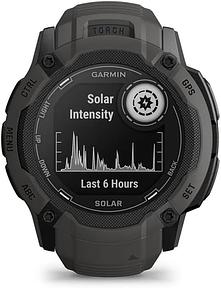
Garmin Instinct 2X Solar, 50mm Multisport-Smartwatch, GPS+GLONASS+Galileo
View at AmazonAffiliate link. Buying through it earns us a commission; the price stays the same for you.
Using a smartwatch without a phone abroad: the eSIM truth
Now the part no other comparison explains cleanly. Two watches here, the Samsung and the Apple, have LTE or eSIM. So can you leave your phone in the hotel safe abroad and still be online? Short version: probably not.
A smartwatch's eSIM or Multi-SIM almost always hangs off your home mobile contract. It shares the number with your phone, and that pairing is tied to your home network. Abroad, it gets complicated. O2 explicitly warns users to check the roaming status of a smartwatch eSIM before travelling, because support abroad is inconsistent. And SimLocal's rundown of eSIM smartwatches notes that most watch eSIMs simply don't work standalone abroad.
Translated: your LTE watch makes you phone-independent at home. On the road, it's no substitute for a proper data connection. For reliable internet while travelling, the route still runs through a travel eSIM on your phone, and that's exactly our home turf at Abroadmode. The maths is simple: a travel eSIM for your phone costs a fraction of carrier roaming, and the watch contributes what it does best, offline GPS and navigation with no data use.
One more word on the "garmin instinct 3" a lot of people search for: the new generation is exciting, but it changes nothing about this logic. Even the strongest outdoor watch still leans on the eSIM in your phone when it comes to data abroad.
Verdict: which watch for which trip?
No model wins on every front, and that's fine. For multi-day trekking with real maps, take the Garmin Fenix 7X Pro Solar or, cheaper and nearly as good, the Amazfit T-Rex 3. For a city break with LTE convenience, the Samsung Galaxy Watch7 fits, while the Apple Watch Ultra 3 leads on tech. And for off-grid hiking, the Amazfit Active Max does the job for little money, while the Garmin Instinct 2X Solar shines on battery but stays honestly a bit short on maps.
And whichever it turns out to be: plan your data connection abroad separately from the watch. The watch navigates, the travel eSIM keeps you online. Separate the two and you'll save money and hassle.
All products from this post
The ones we named above are marked; the rest are alternatives in the same category.
Affiliate notice: As an Amazon Associate, we earn from qualifying purchases. Product prices and availability are subject to change.
Frequently Asked Questions
Which outdoor smartwatch is best for travel?
It depends on the trip. For multi-day trekking with offline maps, the Garmin Fenix 7X Pro Solar is the strongest pick, with the Amazfit T-Rex 3 as the cheaper alternative. For city trips with LTE, the Samsung Galaxy Watch7 LTE or Apple Watch Ultra 3 make sense. For off-grid hiking, battery and offline navigation matter most, and the Amazfit Active Max from around 145 € (as of 10 August 2026) often covers it.
How accurate is an outdoor smartwatch's GPS in a city?
It gets harder in dense old towns, because signals bounce off building walls. Studies measure around 13 metres of error there on average, noticeably less with multi-band reception and good signal processing. Multi-band helps clearly in the urban canyon, but it's not a night-and-day difference. In open terrain, almost every modern watch is very accurate.
Does a smartwatch with eSIM work abroad?
Often not reliably. A watch's eSIM or Multi-SIM usually hangs off your home phone contract and shares its number. Roaming for these watch tariffs is inconsistent abroad and sometimes not supported at all. Check the status with your provider before travelling. For reliable data on the road, a travel eSIM for your phone stays the safe option, and the watch doesn't replace it.
How long does a GPS watch battery last outdoors?
Very differently. Rugged solar outdoor watches like the Garmin Instinct 2X or Fenix 7X manage up to 37 to 40 days in everyday use, and less in active GPS mode. AMOLED watches like the Apple Watch Ultra 3 last more like two days. Important: full multi-band reception can nearly halve GPS runtime, so it pays to switch it on only when you need it.
Do I need offline maps or is breadcrumb navigation enough?
Depends on the tour. A planned, clearly marked route works fine with breadcrumb, following a recorded line with no map image. The moment you replan on the fly or need to orient yourself, real offline maps are worth their weight in gold. Note: not every watch that promises "navigation" has full offline maps, the Garmin Instinct 2X, for one, navigates by breadcrumb only.
Can I navigate with a smartwatch without a phone?
Yes, as long as the watch has its own GPS and offline maps. Models like the Amazfit Active Max, T-Rex 3, or Garmin Fenix store the maps locally and navigate with no connection at all. That even spares your phone battery, which you keep for emergencies. Only for mobile internet do you still depend on a data connection, sensibly through a travel eSIM in your phone.
Sources
- Bitkom Consumer Technology 2024 survey bitkom.org
- Garmin's own GNSS team explains garmin.com
- peer-reviewed 2025 study in the journal Sensors pmc.ncbi.nlm.nih.gov
- SatIQ breakdown garmin.com
- Forbes' rundown of GPS watches with offline maps forbes.com
- independent Manhattan GPS test dcrainmaker.com
- O2 explicitly warns users hilfe.o2online.de
- SimLocal's rundown of eSIM smartwatches simlocal.com